In hydraulic systems, permanent connections such as welded or rigid piping typically provide the highest level of reliability. However, these types of connections are not designed for flexibility or easy removal, meaning they are usually left untouched unless the system is redesigned or decommissioned.
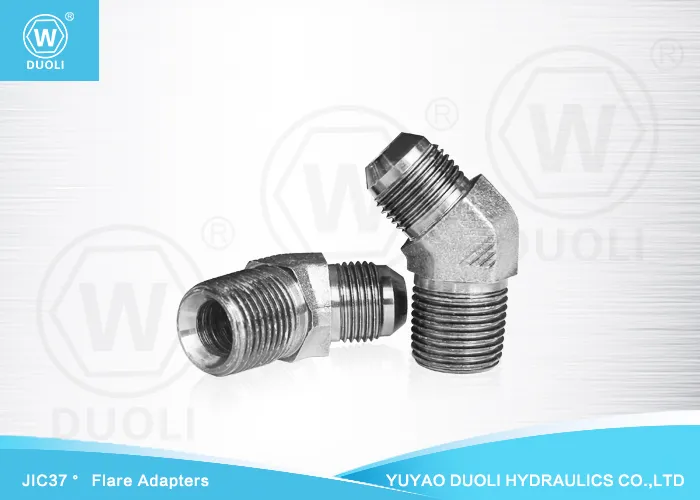
One of the main challenges in hydraulic connection design is achieving a dependable seal while still allowing for disassembly when needed. Earlier types of removable fittings, including NPT and JIC, relied on metal-to-metal contact surfaces to maintain a seal under pressure. While effective to some extent, these designs have limitations. NPT threads tend to deform during installation, making them less suitable for repeated use, while JIC fittings, although convenient for applications requiring frequent assembly and disassembly, may not provide consistent long-term sealing performance.
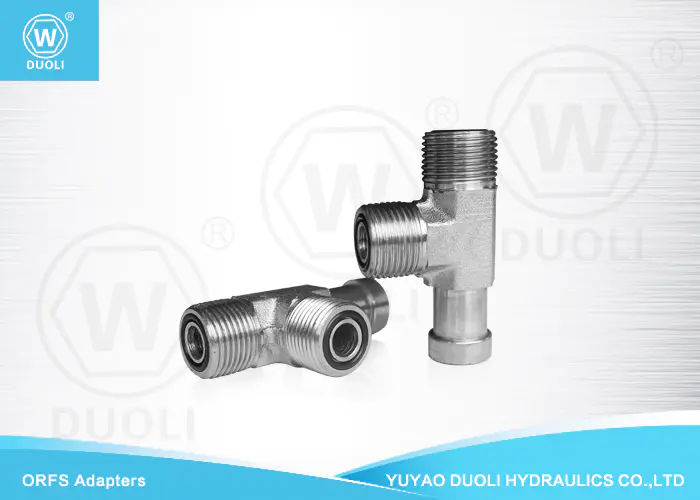
Modern hydraulic systems have increasingly adopted sealing technologies based on elastomeric materials, particularly O-rings, to improve reliability and prevent fluid leakage. Common examples include ORB, BSPP, and metric fittings, as well as O-ring face seal (ORFS) connections. Among these, ORFS hose ends are widely used due to their ability to deliver leak-free performance and allow for easy O-ring replacement.
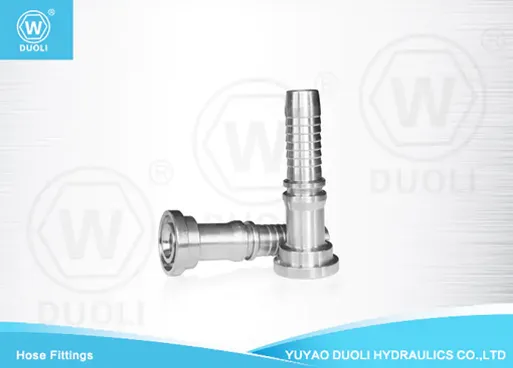
SAE flanges represent another important O-ring-based sealing solution and are defined under the SAE J518 standard. This design uses a four-bolt configuration to secure a flat flange against a matching flat port on components such as pumps, motors, valves, or cylinders. An O-ring seated in a machined groove on the flange face is compressed against the flat port surface, creating a strong and reliable seal capable of handling high-pressure conditions.
SAE J518 flanges are categorized into two pressure classes based on their operating capabilities. Code 61 is intended for standard-pressure applications and generally supports systems operating at or below 3,000 psi. However, in larger sizes, particularly those above approximately 2-1/2 inches, the maximum pressure rating may be lower.
Code 62 flanges are designed for high-pressure applications and are typically rated up to 6,000 psi across most sizes. These flanges are commonly available up to around 2-inch port sizes, and systems requiring extremely high flow rates may need alternative configurations, such as parallel lines or custom-designed components.
Beyond pressure ratings, the physical differences between Code 61 and Code 62 flanges are also significant. Higher pressure capacity in Code 62 designs is achieved through thicker flange bodies, larger bolt diameters, and wider bolt spacing. For example, a 2-inch Code 61 flange typically uses smaller bolts and a thinner flange body, whereas a Code 62 flange of the same size incorporates larger bolts and a more robust structure to withstand increased loads.
SAE flanges provide flexible connection options for hydraulic systems. One common method is the split flange design, which secures an O-ring face hose end against a flat mounting surface using two clamp halves. This approach allows for quick installation and creates a reliable seal without leakage. Additionally, the hose end can be rotated into the desired orientation before tightening, eliminating the need for swivel fittings and simplifying system assembly.
Another option involves the use of flange adapters with threaded ports such as NPT, ORB, or BSPP. These adapters make it easy to integrate SAE flange connections into existing hydraulic systems, allowing newer components like pumps, motors, or cylinders to connect seamlessly with pre-existing hoses and fittings.
SAE J518 flanges are widely regarded as a leading solution for high-pressure hydraulic connections due to their sealing efficiency and adaptability. The use of an O-ring seal significantly reduces the risk of leakage compared to traditional threaded connections, while the four-bolt clamping system ensures even load distribution and strong mechanical stability.
Their design supports a wide range of configurations and simplifies both installation and maintenance. As a result, SAE flanges have become a preferred choice for demanding hydraulic applications where performance, durability, and ease of integration are essential.

 English