Hydraulic hose selection directly affects the safety, efficiency, and service life of hydraulic systems. Among different hose constructions, spiral wire hose and wire braided hose are two widely used solutions for high-pressure hydraulic applications. Although both use steel wire reinforcement, their structures provide different advantages in pressure capability, flexibility, and working environments.
A spiral wire hose is designed for demanding hydraulic systems that require high pressure resistance, strong impulse performance, and long service life. In comparison, a braided wire hose provides better flexibility and is often used in applications where installation space and movement are important. Understanding the differences between these hose types helps engineers and buyers choose the right solution for their equipment.
A spiral wire hose is a hydraulic hose reinforced with multiple layers of high-strength steel wire arranged in a spiral pattern around the inner tube. This structure provides excellent strength and allows the hose to withstand extreme pressure, vibration, and repeated pressure cycles.
The spiral reinforcement design helps distribute internal pressure evenly across the hose wall, reducing stress concentration and improving durability. Compared with standard hydraulic hose designs, a spiral construction offers better performance in heavy-duty applications where equipment operates under continuous pressure changes.
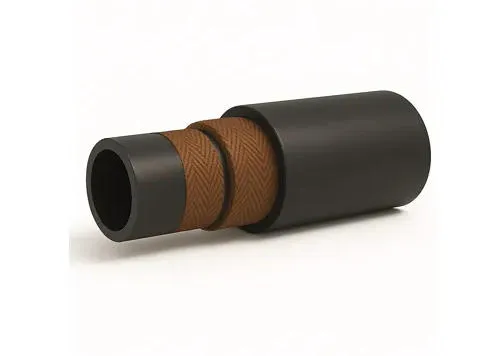
A typical hydraulic spiral hose consists of an inner tube, several layers of spiral steel wire reinforcement, and an outer protective cover. The combination of these layers creates a strong structure suitable for construction machinery, mining equipment, oilfield systems, and other high-pressure hydraulic applications.
Due to its outstanding pressure capability, a spiral wire hose is commonly selected for equipment where reliability and long service life are essential.
A wire braided hose is a hydraulic hose reinforced with braided steel wire layers around the inner tube. The reinforcement wires are woven diagonally, creating a flexible structure that provides a balance between strength and movement capability.
Compared with a spiral wire hose, a braided wire hose usually offers better flexibility and a smaller bend radius. This makes it easier to install in compact hydraulic systems where routing space is limited.
A braided wire hose is commonly used in industrial equipment, agricultural machinery, mobile hydraulic systems, and general hydraulic applications. It provides reliable pressure performance while allowing easier installation.
A wire spiral hose and braided hose serve different purposes. Spiral reinforcement focuses on high-pressure durability, while braided reinforcement provides better flexibility for applications with moderate pressure requirements.
Pressure capability is one of the most important factors when comparing hydraulic hose constructions. The reinforcement structure determines how effectively the hose can handle working pressure, pressure spikes, and repeated impulse cycles.
A spiral wire hose uses multiple layers of spiral steel wire reinforcement, allowing it to withstand higher pressure and stronger hydraulic shocks. This makes it suitable for heavy machinery and equipment that experiences frequent load changes.
A braided wire hose provides reliable pressure resistance but is generally used in applications where flexibility is more important than maximum pressure capability.
| Feature | Spiral Wire Hose | Wire Braided Hose |
|---|---|---|
| Reinforcement Structure | Multiple spiral steel wire layers | Braided steel wire layers |
| Pressure Capability | Higher pressure performance | Medium to high pressure performance |
| Impulse Resistance | Excellent for frequent pressure cycles | Good for general hydraulic systems |
| Flexibility | Lower flexibility | Better flexibility |
For high-pressure hydraulic systems, a hydraulic spiral hose is often preferred because its reinforcement structure provides improved resistance against pressure fatigue and mechanical stress.
Flexibility is another key factor when selecting hydraulic hoses. Although a spiral wire hose provides excellent pressure performance, its multiple reinforcement layers make it relatively stiffer compared with braided designs.
The stronger structure of a spiral hose allows it to maintain stability under high-pressure conditions, but it usually requires more installation space and a larger bend radius. Improper bending may damage the reinforcement layers and reduce hose service life.
A braided wire hose offers better flexibility because the woven wire structure allows more movement between reinforcement layers. This makes it suitable for equipment where hoses need frequent movement or installation in limited spaces.
Important considerations include:
Applications with frequent movement should prioritize flexibility and smaller bend radius.
High-pressure systems should prioritize reinforcement strength and pressure resistance.
Proper installation according to the recommended bend radius helps extend hose service life.
Different industries require different hose constructions depending on operating pressure, equipment design, and environmental conditions.
A spiral hose is widely used in heavy-duty applications where durability and pressure resistance are critical. Construction machinery, mining equipment, drilling systems, and industrial hydraulic equipment often use spiral reinforced hoses because these systems experience high pressure and strong mechanical stress.
A hydraulic spiral hose is especially suitable for excavators, loaders, high-pressure hydraulic cylinders, and other demanding equipment. Its strong reinforcement structure helps reduce failure risks and improve operational reliability.
Braided wire hose products are commonly found in applications where flexibility and easier installation are required. They are suitable for factory equipment, agricultural machinery, and mobile hydraulic systems with moderate pressure requirements.
Selecting the correct hose type according to actual operating conditions helps improve equipment efficiency and reduce maintenance costs.
Choosing between a spiral wire hose and a braided wire hose requires evaluating pressure requirements, installation conditions, and working environments. The correct hose construction should match the actual demands of the hydraulic system.
When selecting a hydraulic hose, consider these factors:
Working pressure: Choose a spiral wire hose for high-pressure systems, frequent impulse conditions, and heavy-duty machinery. A braided wire hose is suitable for moderate pressure applications.
Installation environment: If space is limited or frequent bending is required, a braided hose may provide better flexibility.
Operating conditions: Equipment exposed to vibration, impact, and harsh environments usually benefits from the stronger construction of a hydraulic spiral hose.
Service requirements: Consider expected service life, maintenance frequency, and replacement costs.
Working with an experienced supplier can help ensure the correct hose construction is selected. Duoli Hydraulics provides professional hydraulic hose solutions designed for demanding industrial applications, helping customers improve equipment reliability and performance.
The main advantage of a spiral wire hose is its excellent pressure resistance and impulse performance. Its multi-layer reinforcement structure makes it suitable for heavy-duty hydraulic equipment.
Yes. A braided wire hose generally provides better flexibility and a smaller bend radius, making it easier to install in compact hydraulic systems.
A hydraulic spiral hose is commonly used in construction machinery, mining equipment, oilfield systems, and other high-pressure hydraulic applications.
It depends on the application. A spiral hose provides higher pressure capability, while a braided hose may be a better choice when flexibility and installation convenience are more important.
The choice depends on working pressure, operating environment, flexibility requirements, and expected service life. Consulting an experienced hydraulic hose manufacturer can help identify the best solution.

 English