Hydraulic hoses are flexible tubes designed to transport hydraulic fluids within systems, delivering power to various hydraulic equipment by efficiently transmitting pressurized liquids. They serve as a vital and widely used component in countless industrial applications. The specific types of hydraulic hoses vary based on the intended use case, operating conditions, and the materials employed in their construction.
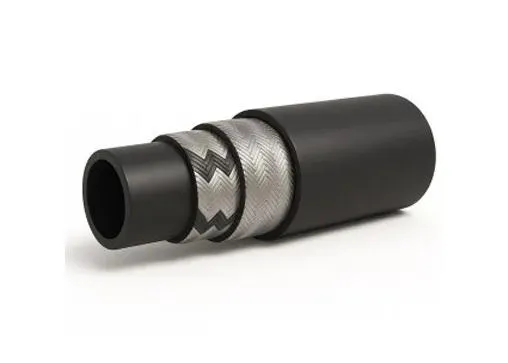
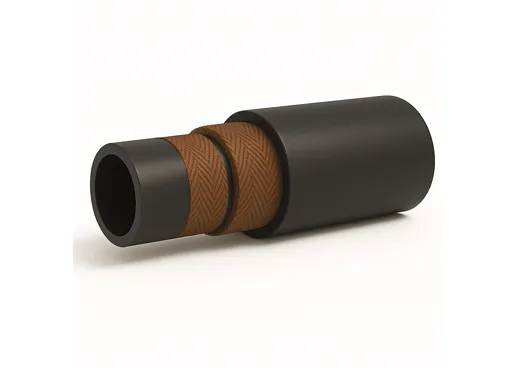
Hydraulic hoses consist of inner and outer rubber layers along with reinforcement layers. The inner and outer layers are typically made from materials such as natural rubber, styrene-butadiene rubber, or butadiene rubber for general purposes. For oil-resistant applications, chloroprene rubber or nitrile rubber is commonly used, while hoses requiring resistance to acids, alkalis, or high temperatures often feature EPDM, fluororubber, or silicone rubber.
The reinforcement layer, which determines the hose's strength and pressure-handling capability, can be constructed from steel wire spirals, steel wire braids, synthetic fibers, or other materials. The choice of reinforcement material and the number of layers depend on factors like the required working pressure, environmental conditions, and application demands. Steel wire reinforcements are preferred for high-pressure scenarios, whereas fiber reinforcements are more common in medium- and low-pressure systems.
Hydraulic hoses can be categorized in several ways, including by pressure rating and structural design.
Based on pressure capacity and intended use, hoses are generally classified as high-pressure, medium-pressure, or low-pressure varieties. High-pressure hoses are engineered to handle substantial pressures and are primarily deployed in demanding environments such as construction machinery, metallurgy, and chemical processing. Medium-pressure hoses find typical use in industrial machinery and automated control systems. Low-pressure hoses, in contrast, are well-suited for transferring gases and liquids under lower pressure conditions.
Another key classification is based on the hose's reinforcement structure and materials.
Braided hoses commonly feature steel wire as the reinforcing material. The braid may consist of a single layer, as seen in standards like EN853 1SN or EN857 1SC, or multiple layers, such as in SAE100 R16, with the exact configuration determined by the pressure level the hose must endure. This steel wire braiding delivers outstanding pressure resistance while preserving a good degree of flexibility. Alternatively, some braided hoses incorporate high-strength synthetic fibers, such as aramid or polyester, as the reinforcement. These fiber-based options are lighter and more flexible, making them ideal for medium- and low-pressure systems, including those meeting SAE100 R3 specifications.
Spiral hoses are designed for applications requiring extreme pressure resistance. Their reinforcement involves high-tensile steel wire wound in spirals, typically in four or six layers. Although this construction provides superior strength, it results in somewhat reduced flexibility compared to braided designs. Examples include SAE100 R12 and SAE100 R9 with four spiral layers, as well as SAE100 R13 and SAE100 R15 with four or six layers.
Thermoplastic hoses stand out for their lightweight construction and strong resistance to chemicals, making them excellent choices where flexibility and chemical compatibility are priorities. Standards such as SAE100 R7 and SAE100 R8 represent this category, featuring thermoplastic inner and outer layers with one or two braids of high-tensile synthetic yarn in the middle for reinforcement.
PTFE hoses offer exceptional performance in terms of temperature and chemical resistance, suiting them for harsh conditions often encountered in aerospace and automotive sectors. For instance, SAE 100 R14 features a PTFE inner tube paired with a stainless steel braid cover.
Specialty hoses are tailored for unique or extreme applications. These include steam hoses built for high-temperature environments, jack hoses optimized for hydraulic jacking systems, and arctic hoses formulated to perform reliably in very low temperatures.
Hydraulic hose sizes are commonly specified by their inside diameter (ID) and outside diameter (OD), with standard ranges typically spanning from 1/4 inch to 2 inches. Custom sizes beyond this range can be produced to meet specific requirements. For guidance on accurately measuring inside and outside diameters, consult reliable industry resources or measurement techniques.
In addition to hydraulic hoses, a wide variety of other hose types are available, such as PVC hoses, PU pneumatic hoses, nylon hoses, silicone hoses, and diverse industrial hoses including those for chemicals, food-grade applications, steam, material conveyance, concrete, water, air, oil, and welding. For any hose-related needs or inquiries, feel free to reach out for assistance or the latest information.

 English