A hydraulic male stud coupling provides a compact way to connect hydraulic tubing, hoses, manifolds, and other components through a fixed male-threaded connection. Although the basic design appears simple, selecting the right male stud coupling requires attention to thread standard, sealing method, pressure rating, material, and installation conditions. A mismatch between a male stud connector and its mating port can result in leakage, thread damage, or reduced service life.
For hydraulic systems using BSP, metric, or other standardized connections, understanding how these fittings are configured and sealed makes hose and piping design more reliable.
A hydraulic male stud coupling is a threaded hydraulic fitting with a male connection on one side and a connection designed for tubing, hose, or another hydraulic component on the other. It is commonly used to connect a hydraulic line to a manifold, valve, cylinder, adapter, or other component with a corresponding female port.
The male threaded section provides the mechanical connection, while sealing is achieved through the thread itself or through a dedicated sealing element such as an O-ring, bonded seal, or sealing washer, depending on the fitting design.
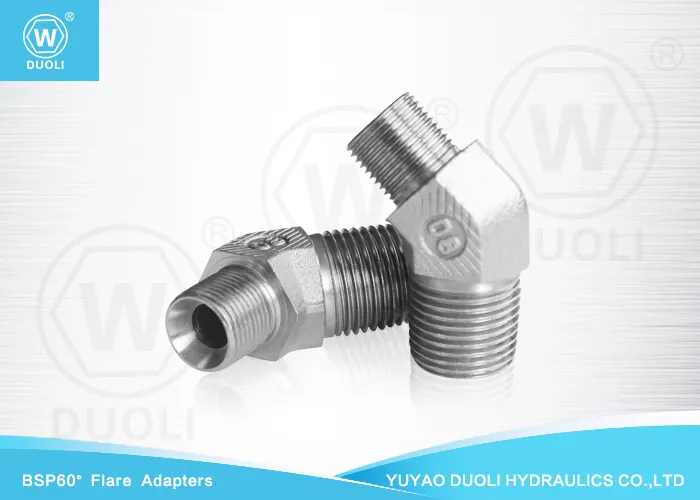
The term male stud fitting is often used for straight configurations, while specialized designs may include elbows or other directional arrangements. A male stud elbow, for example, combines a male threaded port with an angled outlet, making it useful where hydraulic lines must change direction without adding another separate fitting.
Because hydraulic systems can operate under significant pressure and temperature fluctuations, a male stud connector must be selected according to the complete operating environment rather than thread size alone.
Hydraulic male stud fittings are available in several configurations to accommodate different installation requirements. A straight male stud coupling is suitable when the hydraulic line can approach the connection directly. Where space is limited or the hose needs to change direction, an angled design such as a male stud elbow can simplify routing.
Port size and connection type can also vary. Some fittings are designed for direct connection to hydraulic tubing, while others are intended to connect with hoses, adapters, valves, or manifolds. Reducing configurations can connect components with different nominal sizes, while bulkhead-style arrangements can provide a connection through a panel or mounting surface.
| Configuration | Typical Function | Main Selection Consideration |
|---|---|---|
| Straight male stud coupling | Direct hydraulic connection | Thread and port size |
| Male stud elbow | Changes line direction | Angle, space and bend radius |
| Reducing male stud fitting | Connects different sizes | Port and tube dimensions |
| Male stud adapter | Connects different connection types | Thread standard and sealing |
| Bulkhead configuration | Connection through a panel | Mounting dimensions and sealing |
The correct configuration can reduce unnecessary adapters and make hydraulic routing cleaner. However, the fitting should not be forced into a position that creates excessive bending or mechanical stress on the connected hose or tube.
BSP and metric connections are widely used in hydraulic equipment, but they are not interchangeable simply because their nominal dimensions appear similar. A BSP male thread must be matched with the appropriate BSP female port, while metric threads require the corresponding metric specification.
BSP connections can include parallel and tapered thread designs, each with different sealing principles. Metric hydraulic connections may use thread sealing, O-rings, cones, or other dedicated sealing surfaces depending on the specific standard.
For this reason, identifying the connection should include the thread type, diameter, pitch, and sealing design. A fitting described only as a “male stud connector” does not provide enough information for accurate selection.
Duoli's hydraulic fitting range covers multiple connection standards, including metric, British, and American systems. This allows hydraulic assemblies to be configured according to different equipment and piping requirements rather than relying on a single thread system.
The sealing method used by a hydraulic male stud coupling depends on its thread design and connection standard. Some fittings rely on tapered threads to create sealing as the male and female threads tighten. Others use an O-ring, bonded seal, washer, or dedicated sealing face.
Material selection is equally important. Hydraulic fittings are commonly produced from materials selected for mechanical strength, corrosion resistance, and compatibility with the operating fluid. Carbon steel, stainless steel, and other materials may be used depending on application requirements.
Seal material must also be compatible with the hydraulic medium and temperature range. Hydraulic oil, water-based fluids, and specialized fluids can interact differently with elastomeric sealing materials. A seal that performs well in one system may not have the same service life in another.
Thread sealant should only be used when appropriate for the connection design. Applying excessive sealant can interfere with assembly or introduce material into the hydraulic circuit. For fittings that use an O-ring or bonded seal as the primary sealing element, additional thread sealant may be unnecessary or inappropriate.
Installing a male stud coupling correctly is essential for maintaining the integrity of a hydraulic connection. Before assembly, the installer should confirm the thread specification and inspect both mating components for contamination, burrs, or damaged threads.
The fitting should be aligned with the mating port before tightening. For tapered threads, excessive force can damage the fitting or port, while insufficient engagement may result in leakage. For fittings using an O-ring or sealing washer, the sealing element should be clean, correctly positioned, and free from visible damage.
When connecting the hydraulic line, avoid using the fitting to compensate for poor hose routing or misalignment. Excessive side loading can place unnecessary stress on the connection. After installation, the assembly should be inspected under appropriate operating conditions to confirm that the connection remains leak-free.
Confirm the thread standard and nominal size before assembly.
Inspect threads, O-rings, and sealing surfaces for damage.
Keep mating surfaces clean and free from debris.
Tighten according to the fitting manufacturer's recommended procedure.
Ensure the hose or tube is properly aligned and supported.
Check the completed assembly for leakage before normal operation.
Good installation practice is particularly important in compact hydraulic systems because even a small fitting may be exposed to vibration, pulsation, and temperature changes during operation.
Choosing the right hydraulic male stud coupling starts with the connection rather than the fitting shape. First identify the female port into which the fitting will be installed. Confirm whether it uses BSP, metric, or another thread standard, and determine whether the thread is parallel or tapered.
Next, check the hydraulic system's maximum working pressure and temperature. The fitting must be suitable for the same or greater operating conditions, while the connected hose, tube, and other components must also have compatible ratings.
Fluid compatibility should then be considered. The fitting body, coating, O-ring, and other sealing materials need to withstand the hydraulic medium and surrounding environment.
Finally, evaluate the physical installation. Port orientation, available space, hose bend radius, vibration, and access for maintenance can determine whether a straight male stud fitting or a male stud elbow is more appropriate.
A male stud connector is used to connect a hydraulic hose, tube, manifold, valve, or other component to a female threaded port. Its exact application depends on the thread standard, sealing method, and connection configuration.
A straight male stud coupling provides a direct connection, while a male stud elbow changes the direction of the hydraulic line. Elbow configurations can be useful when installation space or hose routing requires an angled connection.
No. BSP and metric threads have different dimensions and thread characteristics. The mating port should be identified before selecting the fitting to prevent cross-threading or unreliable sealing.
The sealing method depends on the fitting design. It may use tapered thread interference, an O-ring, bonded seal, washer, or another dedicated sealing surface.
Confirm the thread standard, thread size, sealing method, working pressure, temperature range, material, hydraulic fluid compatibility, and required fitting configuration.
A reliable hydraulic connection depends on more than selecting a fitting that physically fits the port. The hydraulic male stud coupling must match the thread standard, sealing system, pressure and temperature requirements, fluid, and installation environment. Whether the application calls for a straight male stud connector, a reducing male stud fitting, or a male stud elbow, accurate specification and proper installation help minimize leakage and improve hydraulic system reliability. Duoli's range of hydraulic fittings and adapters provides connection options for different hydraulic standards and system configurations.


 English