In high-pressure hydraulic systems, connection reliability can be just as important as hose and fitting pressure ratings. SAE J1453 defines a connection approach based on an O-ring face seal that helps reduce leakage by creating the primary seal at the mating faces rather than relying on thread interference. This makes the standard particularly relevant to hydraulic systems where vibration, pressure fluctuations, and repeated maintenance can challenge conventional threaded connections.
Understanding the design of SAE J1453, the role of the O-ring, and correct assembly practices helps engineers select and install ORFS fittings more reliably.
SAE J1453 is a SAE standard associated with O-Ring Face Seal (ORFS) hydraulic connections. Unlike tapered threaded connections that depend on thread interference for sealing, an ORFS connection uses an elastomeric O-ring positioned in a machined groove on the fitting face. When the male and female components are tightened together, the O-ring is compressed between the mating surfaces to create the fluid seal.
This design separates the mechanical function of the thread from the sealing function. The threads provide the force needed to secure the connection, while the O-ring provides the primary seal.
The standard is widely relevant to hydraulic applications where minimizing external leakage is important. Because the sealing surface is located at the face of the fitting, the connection can provide consistent sealing when the components are correctly manufactured, assembled, and maintained.
The term J1453 is commonly used when discussing this connection family, while ORFS is the more descriptive abbreviation for O-Ring Face Seal.
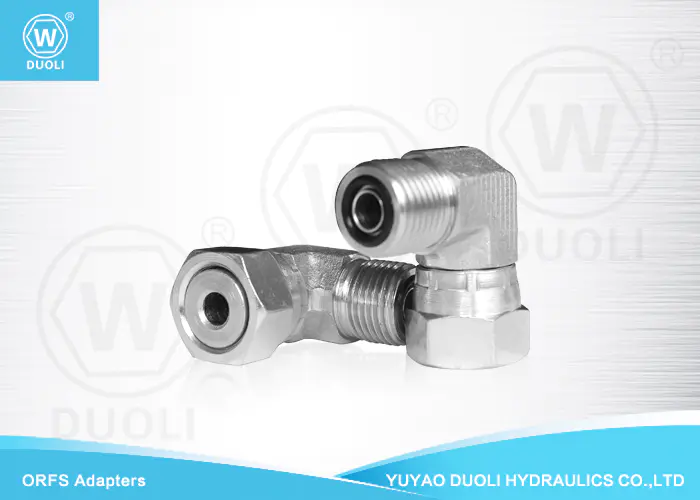
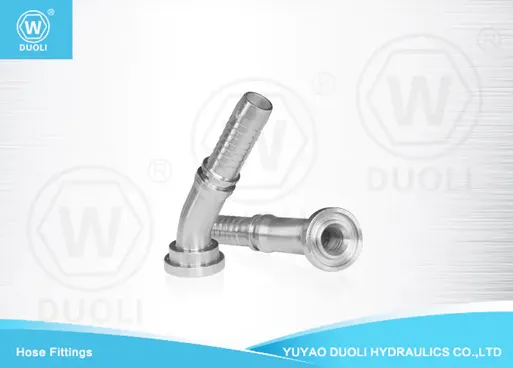
An ORFS fitting consists of a male fitting with a flat sealing face and an O-ring seated in a precisely machined groove. The corresponding female fitting has a mating face and a threaded nut that draws the two components together.
During assembly, tightening the nut pushes the two faces together and compresses the O-ring. The resulting contact provides the primary barrier against hydraulic fluid escaping from the connection.
| Feature | SAE J1453 ORFS Connection | Conventional Tapered Thread |
|---|---|---|
| Primary sealing method | O-ring face seal | Thread interference |
| Sealing location | Fitting face | Thread interface |
| O-ring | Yes | Not normally |
| Thread function | Mechanical retention | Retention and sealing |
| Leakage sensitivity | Strongly affected by O-ring condition and face damage | Strongly affected by thread condition and sealant |
| Typical advantage | Reliable sealing with reduced thread leakage | Simple and widely available connection |
One advantage of the ORFS design is that the sealing function does not depend on thread deformation. This can be useful in hydraulic systems exposed to vibration and pressure cycling.
However, the O-ring face must remain clean and undamaged. A scratched sealing face or improperly installed O-ring can compromise the connection even when the threads are correctly engaged.
The defining feature of SAE J1453 is the O-ring face seal. The O-ring sits inside a groove machined into the fitting face. When the connection is assembled, the O-ring is compressed between the male and female faces.
Because the O-ring is responsible for the primary seal, its material should be compatible with the hydraulic fluid and operating temperature. An unsuitable elastomer can harden, swell, crack, or lose its sealing capability over time.
The sealing face is equally important. Dirt, metal particles, scratches, corrosion, or other surface damage can create leakage paths. Unlike a tapered thread, an ORFS connection cannot compensate for significant damage to the dedicated sealing surface simply by increasing tightening force.
The O-ring should therefore be inspected whenever a connection is assembled or serviced. If the seal shows signs of cutting, flattening, hardening, or other damage, replacement is generally preferable to attempting to reuse it.
Although the O-ring provides the primary seal, the orfs thread remains important because it controls how the fitting components are mechanically joined. Selecting an ORFS fitting requires identification of the correct size and mating configuration rather than relying solely on nominal hose dimensions.
ORFS sizes are commonly associated with SAE sizing conventions. For example, SAE J1453 1 may appear in searches or product descriptions when users are looking for a particular J1453 connection size, but the complete fitting specification should always be confirmed before purchase.
Size identification should include the fitting end, hose connection, thread dimensions, and mating component. An apparently similar fitting may use a different connection standard or sealing arrangement.
For hydraulic equipment operating across different standards, checking product drawings and specifications is especially important. Duoli's hydraulic fittings range includes ORFS products alongside other connection systems, allowing users to compare fitting configurations according to the requirements of their hydraulic circuits.
Leakage from an ORFS connection is not necessarily caused by a design problem. In many cases, installation, contamination, damaged sealing surfaces, or incorrect components are responsible.
Common causes include:
Damaged, cut, hardened, or incorrectly positioned O-rings.
Scratches, dents, corrosion, or contamination on the sealing face.
Incorrect ORFS size or incompatible mating components.
Cross-threading or improper thread engagement.
Excessive or insufficient tightening.
Misalignment between the hose, tube, and fitting.
Excessive vibration or external mechanical loading.
Reusing a damaged sealing element.
Increasing tightening force is not a universal solution for leakage. Excessive torque may damage the fitting, deform the O-ring, or create unnecessary mechanical stress. The correct approach is to identify the actual cause of the leak and follow the manufacturer's assembly requirements.
Proper assembly begins before the fitting is tightened. The O-ring groove, sealing face, threads, and mating components should be clean and free from debris. The O-ring should be inspected and positioned correctly without twisting or cutting it.
The male and female components should then be aligned naturally. The nut should engage smoothly by hand before the final tightening procedure. If resistance occurs immediately, the connection should be checked rather than forced.
Confirm that the fitting and mating port use the correct ORFS size and configuration.
Inspect the O-ring and replace damaged or questionable seals.
Check the sealing face for scratches, dents, contamination, and corrosion.
Make sure the hose or tube is properly aligned and supported.
Tighten the connection according to the applicable manufacturer or assembly specification.
Inspect the completed connection for leakage under appropriate operating conditions.
Correct hose routing also matters. An ORFS fitting should not be used to compensate for excessive hose bending, twisting, or misalignment. External loads transferred to the fitting can affect long-term sealing performance even when the initial assembly is leak-free.
SAE J1453 refers to a standard associated with O-Ring Face Seal hydraulic connections. Its defining feature is an O-ring positioned between mating fitting faces to provide the primary seal.
An ORFS fitting is a hydraulic fitting that uses an O-ring face seal instead of relying primarily on tapered thread interference. It is commonly selected for hydraulic systems where reliable leakage control is important.
No. In an ORFS connection, the thread mainly provides mechanical engagement and clamping force. The O-ring face seal creates the primary fluid barrier.
Common causes include damaged O-rings, contaminated sealing faces, incorrect fitting sizes, misalignment, improper tightening, and damaged components.
Reusing an O-ring is generally not recommended when it has been compressed, damaged, contaminated, or removed during maintenance. A new, compatible seal provides a more reliable starting point for reassembly.
ORFS connections are widely used in hydraulic systems where reliable face sealing is required, but suitability depends on the specific fitting, size, material, hose assembly, and pressure rating. The complete assembly should always be checked against the manufacturer's specifications.
The strength of the SAE J1453 connection lies in separating mechanical engagement from fluid sealing. By using an O-ring face seal, the design can reduce dependence on thread interference and provide reliable leakage control when the sealing surfaces and components are correctly specified. For hydraulic systems requiring ORFS fittings, accurate size identification, compatible O-ring materials, proper alignment, and disciplined installation are essential to achieving long-term connection performance. Duoli's ORFS fitting range provides options for hydraulic applications where dependable face-seal connections are required.

 English