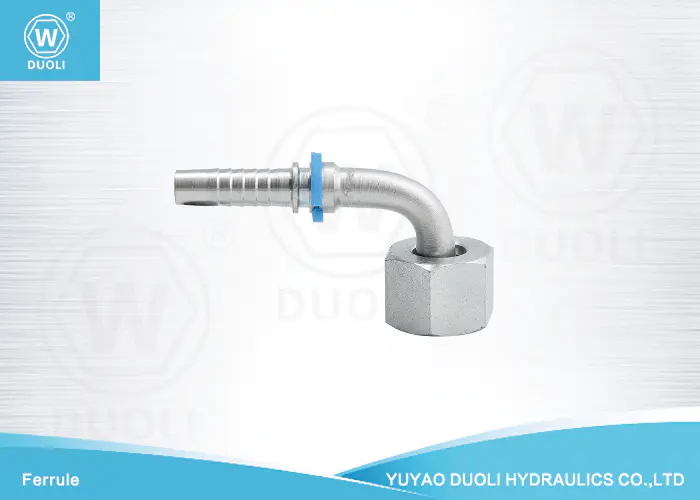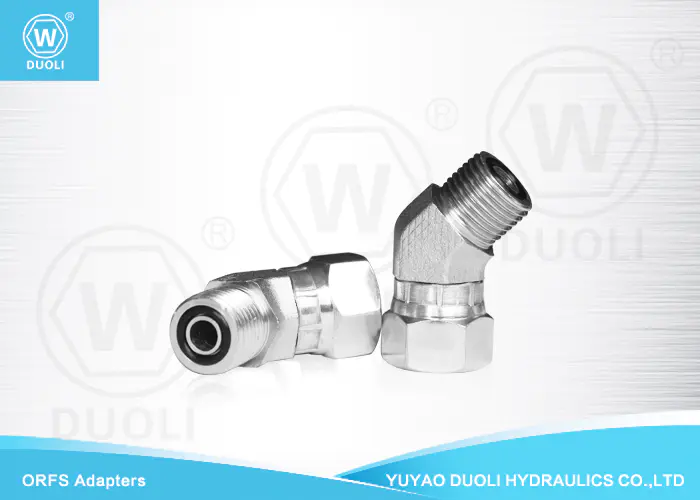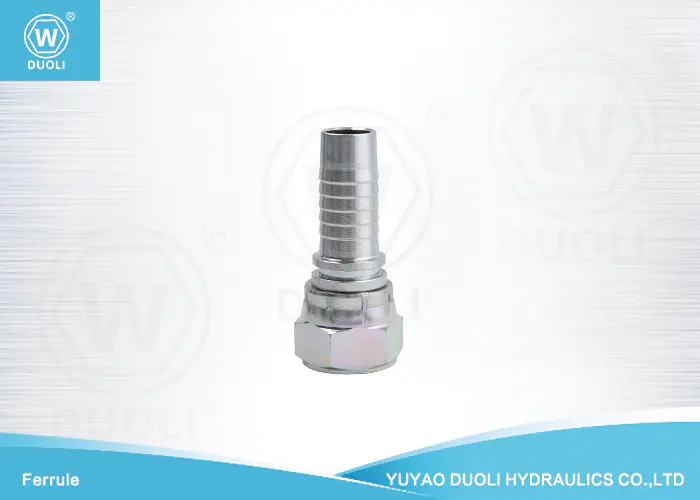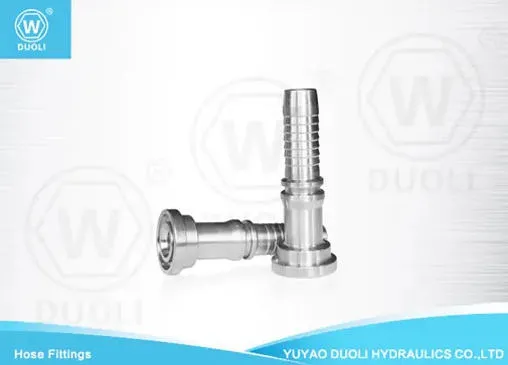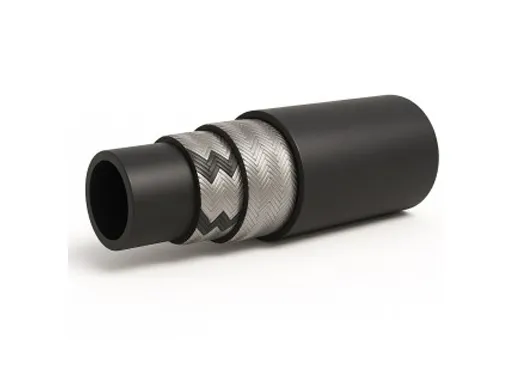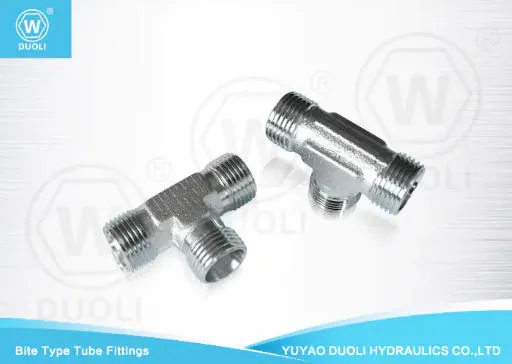
Hydraulic fittings are essential components in hydraulic systems. They connect various hydraulic elements such as pumps, delivery pipelines, reversing valves, stop valves, hydraulic motors, and hydraulic cylinders to form a complete closed loop. These fittings allow pipelines to be connected, fluid direction to be changed, and flow to be distributed as needed. Thanks to their compact structure, lightweight design, and reliable performance, hydraulic fittings are widely used in mechanical equipment, engineering machinery, aerospace, and many other fields. They have become particularly indispensable in engineering machinery applications.
Because the components being connected often differ at each end, hydraulic fittings come in many varieties. The hydraulic fittings primarily offered by Duoli are designed to connect to hydraulic hoses on one end and to hoses, pumps, motors, or hydraulic cylinders on the other. These fittings can be classified in various ways depending on the connection method, thread type, and sealing approach.
Hydraulic fittings can be categorized according to their connection method. The most common types include flared, welded, inserting, crimping, detachable, and quick-change fittings.
Flared pipe fittings consist of a fitting body, a bushing, and a nut. They work by pressing the 37° flared end of the pipe against the conical surface of the fitting body to create a metal-to-metal seal. The bushing helps absorb vibration and reduces fatigue in the pipeline while preventing the steel pipe from rotating during nut tightening. Because they rely on a hard metal seal, flared fittings perform well across a wide temperature range. Their easy installation and lack of need for welding make them especially popular in medium- and low-pressure hydraulic and pneumatic systems.
Compression fittings are made up of three main parts: the fitting body, a ferrule, and a nut. When the nut is tightened, the front end of the ferrule presses against the conical surface of the body while its inner edge bites evenly into the pipe, forming a secure seal. These fittings are widely used for connecting pipelines carrying oil, water, steam, and other media in hydraulic systems. Thanks to their simple structure and ease of use without welding, compression fittings are common in the chemical, pharmaceutical, petroleum, electrical, and scientific research industries.
Welded hose fittings achieve pipeline connections through welding and are suitable for transporting non-corrosive or corrosive media such as oil, water, and gas. They are extensively applied in oil refining, chemical processing, light industry, textile manufacturing, national defense, metallurgy, aviation, shipbuilding, and various mechanical engineering and machine tool systems.
Quick-change fittings are specially designed for fast connection and disconnection of liquid and gas pipelines. They are widely used in both hydraulic and pneumatic systems, offering the advantage of quick hose replacement or connection when needed.
Crimp hose fittings consist of a connector jacket and a connector core, making them ideal for hose connections. Their compact structural design allows efficient installation even in tight spaces. These fittings use a specialized sealing structure that effectively prevents fluid leakage, thereby enhancing the overall stability and safety of the hydraulic system.
Hydraulic hose fittings are also classified according to their thread types. Common varieties include NPT tapered thread fittings, JIC 37° cone angle fittings, SAE 45° cone angle fittings, O-ring end face seal fittings, BSP fittings, flange fittings, and JIS fittings.
NPT fittings follow the American standard for tapered pipe threads and are used to seal fluid and gas delivery pipelines effectively. NPTF (National Pipe Taper Fuel) fittings are particularly common in fluid power systems, where tapered threads create a seal through thread deformation.
JIC fittings feature a 37° cone angle or cone seat and are widely used in high-pressure hydraulic pipelines, as standardized by the Society of Automotive Engineers (SAE). These fittings use straight threads on both male and female sides, with sealing achieved at the 37° cone seat surface.
SAE fittings refer to those with a 45° cone angle or cone seat. They are typically suitable for lower-pressure applications such as fuel lines and refrigeration lines. Like JIC fittings, SAE male and female threads are straight but form a seal at the 45° tapered surface. Some thread sizes overlap with JIC 37° fittings, so careful measurement of the cone angle is recommended to distinguish between them.
O-ring end face seal fittings use straight threads where the male side includes an O-ring and the female side has a sealing end face. Sealing occurs at the O-ring on the male thread and at the end face on the female thread.
BSP fittings are British Standard Pipe thread connectors commonly used in hydraulic and pneumatic systems. They mainly include BSPP (parallel pipe threads) and BSPT (tapered pipe threads).
Hydraulic flange fittings are detachable connection components made up of flanges, gaskets, and bolts. They provide reliable sealing for pipes and equipment through bolt tightening and are widely used in construction, chemical, and machinery industries.
JIS fittings follow Japanese industrial standards and are mainly applied in industrial automation and fluid control systems, particularly in Japan and some Asian countries.
Hydraulic fittings can also be classified based on their sealing methods, including cone seal, O-ring seal, spherical seal, flat face seal, combined seal, and adhesive seal.
Cone seals use a conical contact surface to achieve reliable sealing. With a simple and robust structure, they are common in high-pressure hydraulic systems. Sealing is accomplished through tight metal-to-metal or metal-to-sealing-ring contact. Common cone angles include 24°, 37°, and 74°, each suited to different pressure levels and applications. For instance, 24° cones are often used with high-pressure hoses, while 74° cones are preferred for ultra-high-pressure hard pipe connections.
O-ring seals involve embedding a rubber O-ring in the joint structure, which is compressed to form a tight seal. This method offers excellent vibration resistance and works well in high-pressure systems. However, the rubber material limits its use in extremely high-temperature environments.
Flat face seals create sealing between flat surfaces and are suitable for medium- and low-pressure hydraulic systems. They feature a simple structure, low manufacturing cost, and easy disassembly, making them convenient for maintenance. While effective under low pressure, they are generally not recommended for high-pressure applications.
Spherical seals are designed for high-pressure sealing and to compensate for minor assembly misalignments. They achieve sealing through the contact between a spherical surface and a conical surface or ball socket, and are often used in mechanical movable joints.
Combined seals integrate multiple sealing techniques to enhance overall performance. These may combine metal and elastic seals or use elastic materials of different types. By leveraging the strengths of each method, combined seals can address more complex sealing requirements.
Adhesive seals involve applying a special adhesive to the contact surfaces of the pipe joint to bond them tightly together. This method is simple to apply and works well for static sealing applications. However, it depends heavily on the quality of the adhesive and may experience sealing failure over time due to aging.
Duoli offers a wide range of hydraulic fittings to meet diverse needs. In practical applications, the appropriate type should always be selected based on the specific working conditions, pressure requirements, and system demands. As a manufacturer of hydraulic hoses and fittings, Duoli is ready to assist with any questions you may have regarding hydraulic hoses and fittings. Please feel free to contact us for more information.

 English